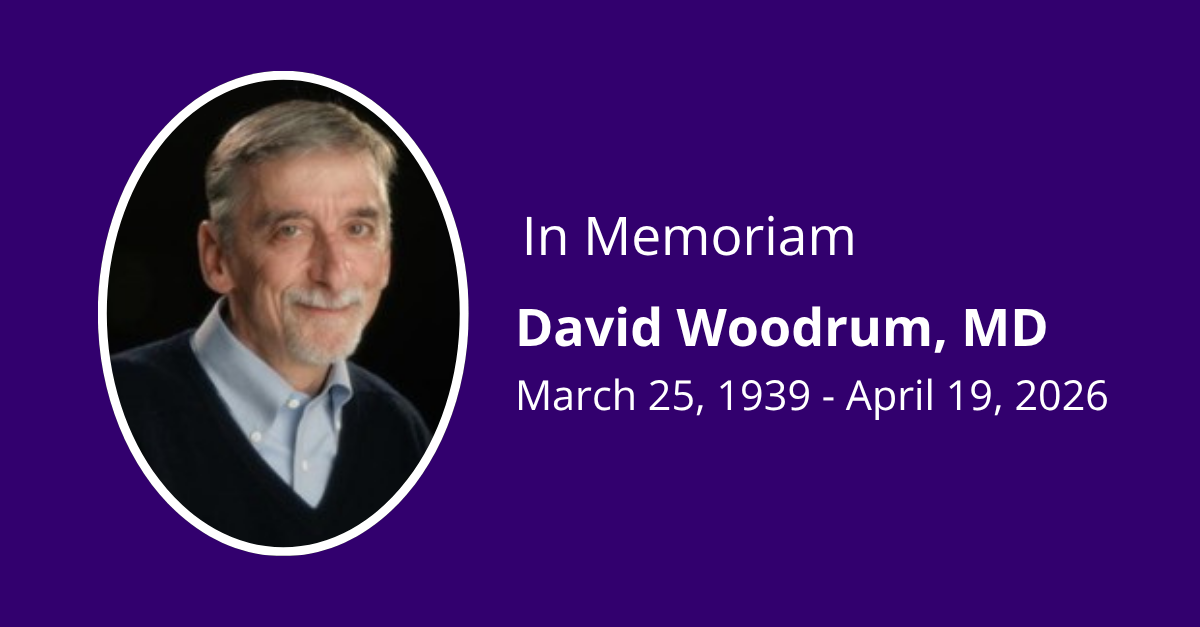
The Division of Neonatology in the UW Department of Pediatrics has lost one of its foundational figures. Dr. David Woodrum passed away on April 19, 2026, at the age of 87, at home surrounded by his family. David helped shape the division during its earliest years and remained a steady, guiding presence for decades.
David joined the UW School of Medicine faculty in 1970. Alongside early leaders such as Dr. William Alan Hodson, he helped build the clinical, academic, and cultural foundations of what was then called the Neonatal and Respiratory Disease Division. When he started, he spent half his time in the NICU at the UW and half as a pulmonary attending at Seattle Children’s (then called Children’s Orthopedic Hospital). Eventually, David chose to focus on neonatology and served as a core faculty member in the Division of Neonatology for decades.
David’s early work reflected a strong investment in both neonatal respiratory research and education. His laboratory efforts helped establish an academic foundation in the division that continues to shape the program today. At his core, David was a teacher and mentor. For many years he served as an advisor to medical students, and David and his wife Sue regularly hosted advisory dinners at their home. Trainees and junior faculty consistently describe him as steady, thoughtful, and deeply committed to their growth. He held high standards and approached teaching with seriousness and humility. He believed that developing others was central to the work. Many who trained under David, including colleagues such as Greg Redding, Peter Tarczy-Hornoch, Dennis Mayock, Craig Jackson, Tom Strandjord, and Sunny Juul, carry forward the imprint of his influence.
Midway through his career, David faced a life-threatening illness that prevented him from continuing as an intensivist. He adapted with purpose. Deeply interested in medical ethics and the care of vulnerable patients and families, he pursued formal training in health care ethics and became a respected voice in bioethics, a trusted consultant, and a mentor focused on the human dimensions of medicine. He was instrumental in establishing the ethics consult services at both UW Medical Center and Seattle Children’s.
David ended his career as a prenatal consultant with the Maternal-Fetal Medicine Clinic at UW, where he helped parents navigate the uncertainty and complexity of complicated pregnancies. This chapter reflected what so many valued in him: calm judgment, compassion, intellectual honesty, and a deep commitment to helping families through difficult decisions.
Upon David’s retirement, the division established the David E. Woodrum Faculty Teaching Award. This annual award recognizes faculty who demonstrate exceptional dedication to education and mentorship of neonatal fellows and reflects what mattered most to him: the development of others and the responsibility to teach well.
David’s legacy is not defined by a single role or accomplishment. It is seen in the structure of the division, in the care provided, in the commitment to teaching, and in the generations of physicians he helped shape. His career is a reminder that the most lasting impact in academic medicine comes through people. He lived with purpose, resilience, and quiet influence. He will be remembered with deep respect and lasting gratitude.
Memorial contributions may be made to the David E. Woodrum Faculty Teaching Award Fund.